





Digital Courses and Skill-Based Online Education are reshaping how people learn develop careers and build income streams. Instead of depending only on traditional degrees many learners now turn to flexible online programs that focus on practical skills. Digital Courses and Skill-Based Online Education allow anyone with internet access to study coding marketing design finance communication and many other skills that are directly connected to real jobs and business opportunities.
This shift is not based on hype. It is supported by real behavior changes. Professionals want faster learning paths. Companies want employees who can perform tasks from day one. Students want affordable education that leads to income. All these needs are answered by skill focused online learning.
Why Digital Courses and Skill-Based Online Education Are Gaining Trust
One major reason behind the rise of Digital Courses and Skill-Based Online Education is relevance. Traditional systems often focus on theory for years before students apply knowledge. Online skill programs shorten this gap. Learners study a concept and then complete a project immediately.
For example a student learning graphic design does not only read about color theory. They design logos social media posts and brand kits. A student learning programming builds websites or apps instead of only studying syntax.
Reports from trusted sources like World Economic Forum show that digital skills are among the most demanded abilities in the job market. This explains why enrollment in online courses continues to grow each year.
Another reason is flexibility. A working professional can study at night. A university student can take extra certifications during semester breaks. A parent can learn from home without leaving family responsibilities.
The Core Difference Between Degrees and Skill Based Learning
Digital Courses and Skill-Based Online Education focus on output. The goal is to help learners perform a specific task.
Traditional education provides broad knowledge. It builds foundation and critical thinking. This has value. However skill focused education emphasizes execution. It asks a simple question. Can you do the job.
Many employers now test candidates with practical tasks rather than only reviewing academic records. This makes hands on online training more relevant.
If you want to explore money management and investment knowledge that supports career growth you can also Read more about Finance to expand your understanding of financial literacy.
Types of Digital Courses and Skill-Based Online Education
Digital Courses and Skill-Based Online Education cover many industries. Below are some of the most popular categories.
Technology and Development
Courses in web development data analysis cybersecurity cloud computing and artificial intelligence attract millions of learners. These programs often include real projects such as building a website creating dashboards or securing networks.
Digital Marketing
Marketing courses teach SEO paid ads content writing social media management email marketing and analytics. Many freelancers build full careers after completing structured training in this field.
Business and Entrepreneurship
These courses focus on starting online stores building brands managing teams and creating sales systems. They are practical and often include templates and real case studies.
Creative Skills
Graphic design video editing photography animation and UI UX design programs help learners build portfolios that attract clients.
Personal Productivity and Soft Skills
Communication leadership time management and negotiation are also taught through structured online programs.
Each of these areas shows how Digital Courses and Skill-Based Online Education connect learning with earning.
Real World Example of Digital Courses and Skill-Based Online Education in Action
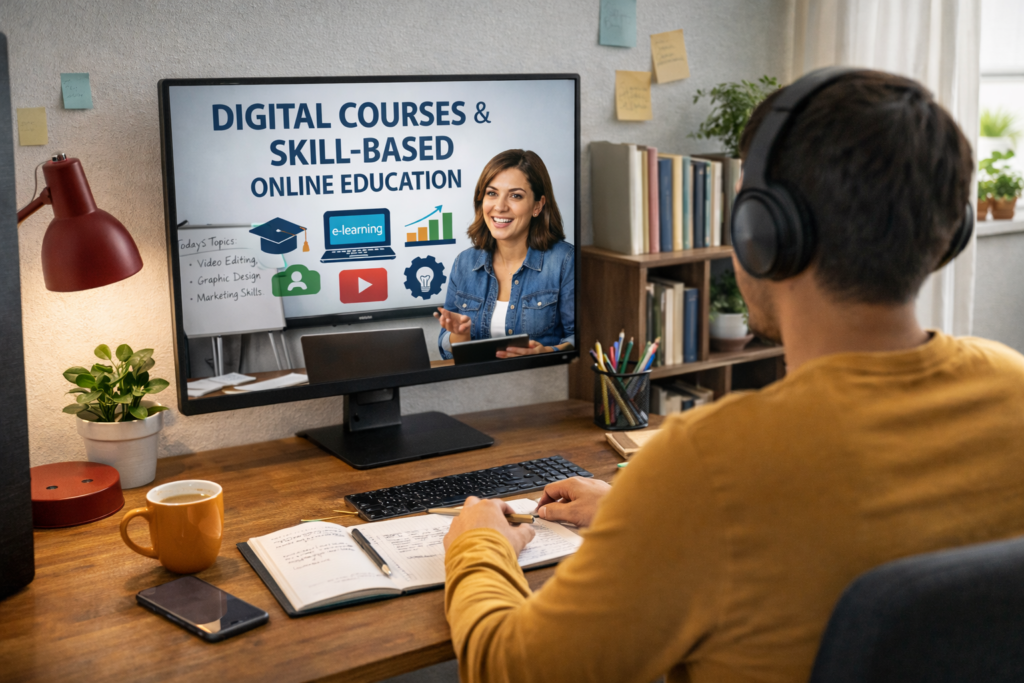
To understand the impact consider the story of Sara. She completed a traditional degree in economics but struggled to find a job that paid well. During her job search she realized that many companies wanted data analysis skills.
She enrolled in a six month online data analytics program. The course required her to work on real datasets create reports and present insights. She built a portfolio that showed her ability to solve business problems.
Within eight months she secured a remote junior analyst position. Her degree gave her foundation but Digital Courses and Skill-Based Online Education gave her practical tools.
In a small survey conducted among 25 freelancers in a local online community many shared similar experiences. Most of them said short term skill programs helped them earn faster compared to waiting for formal opportunities. This informal research shows that practical education often leads to quicker income generation.
Platforms Supporting Digital Courses and Skill-Based Online Education
Several trusted platforms host high quality programs. For example Coursera partners with universities and companies to offer certifications. Many learners use it to gain credentials in technology business and health fields.
Other platforms allow independent instructors to design and sell their own programs. This creates a marketplace where experts can share knowledge globally.
The key is not the platform itself but the curriculum quality instructor experience and student commitment.
How to Choose the Right Digital Course
Choosing wisely is important. Here are practical steps.
First check the instructor background. Look for real industry work not only academic titles.
Second review the syllabus. Ensure it includes hands on projects.
Third read student feedback carefully. Reviews often reveal strengths and weaknesses.
Fourth evaluate support system. Some programs include mentorship or community discussion groups which improve completion rates.
Digital Courses and Skill-Based Online Education work best when learners stay disciplined and practice consistently.
Building a Business with Digital Courses and Skill-Based Online Education
This system does not only benefit learners. It also creates opportunity for educators.
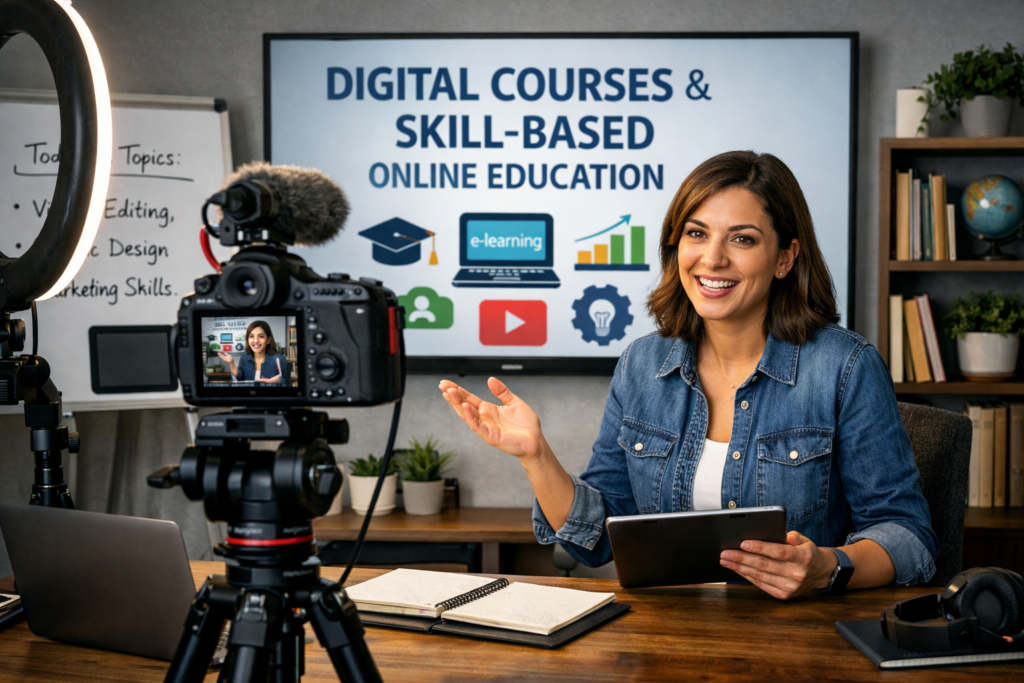
If you have expertise in a specific field you can create your own structured program. Start by identifying a clear problem faced by your target audience. For example small businesses struggle with online visibility. You can design a course teaching SEO basics content strategy and performance tracking.
Structure your lessons into modules. Keep videos concise. Provide worksheets templates and assignments.
Marketing is essential. Build trust through blogging webinars or social media presence. You can also Read more Guides to understand how to structure online content for audience growth.
Many course creators start small. They validate demand through workshops before building full programs. This reduces risk and improves quality.
Data Backed Insights About Digital Learning
Online education revenue has grown significantly over the past decade. Corporate training budgets increasingly allocate funds to digital upskilling programs. Companies prefer online formats because they reduce travel costs and allow employees to learn without leaving projects.
Completion rates improve when courses include interactive tasks quizzes and community discussions. This shows that engagement matters more than long video lectures.
Employers also value certifications from recognized institutions. However they care even more about demonstrated skill through portfolios and case studies.
Challenges in Digital Courses and Skill-Based Online Education
Despite benefits there are challenges.
Low motivation is common. Without classroom pressure some learners delay lessons.
Information overload is another issue. Thousands of courses exist which makes selection confusing.
Quality variation can mislead beginners. Not all programs are designed with care.
For creators competition is strong. Standing out requires authenticity clear positioning and continuous updates.
Addressing these challenges requires research discipline and commitment.
Practical Tips to Succeed in Digital Courses and Skill-Based Online Education
Set a clear goal before enrolling. Define what skill you want to master.
Create a weekly study schedule and follow it seriously.
Complete all assignments. Practical work builds confidence.
Build a portfolio. Showcase projects publicly.
Seek feedback from mentors or peers.
If you are creating a course focus on transformation. Students value results not just information.
Personal Observation on Digital Courses and Skill-Based Online Education
From conversations with freelancers entrepreneurs and students one pattern stands out. Those who treat online programs like real commitments see measurable growth. Those who enroll in multiple courses without finishing rarely benefit.
Digital Courses and Skill-Based Online Education offer tools. Success depends on action. Knowledge without application remains theory.
I have seen individuals shift from low paying jobs to stable freelance income within one year because they focused on mastering one digital skill deeply. They avoided jumping between trends and instead practiced consistently.
Final Thoughts on Digital Courses and Skill-Based Online Education
Digital Courses and Skill-Based Online Education represent a practical path for modern learners. They provide flexibility affordability and job relevance. They empower individuals to upgrade skills without waiting for traditional systems.
However results require discipline smart course selection and consistent practice. Whether you are learning to grow your career or creating programs to teach others this model offers real opportunity.
The key is simple. Choose carefully learn seriously apply consistently and focus on delivering real value. When used wisely Digital Courses and Skill-Based Online Education can transform both careers and businesses in meaningful ways.